
SONO Asia Lens Vol.5 🪷 Bali, After The Postcard | The Architecture of Offerings
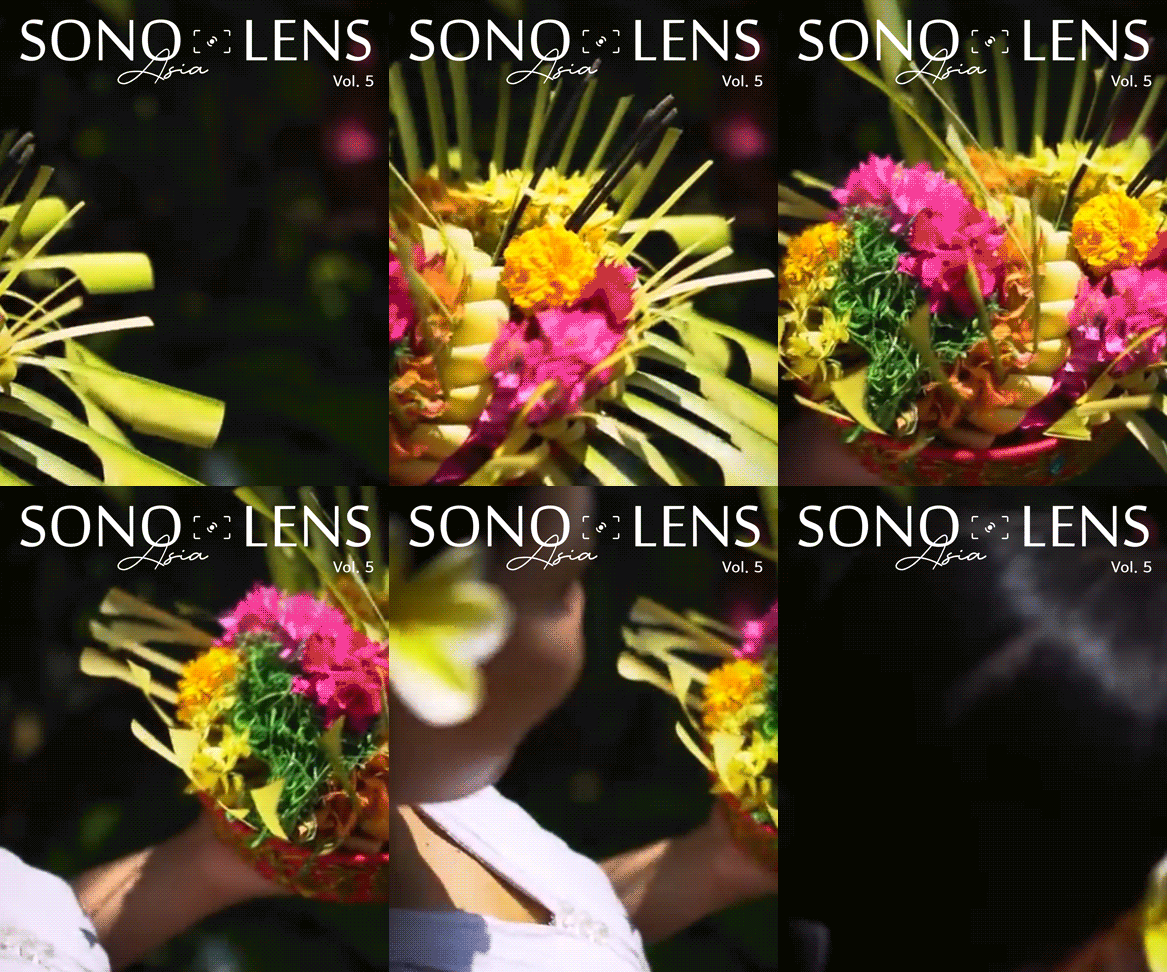

Every morning, Bali begins with flowers.
Before cafés open, before breakfast service begins, and before travelers step
into the streets with cameras in hand, the island quietly fills with small offerings
known as
canang sari.
They appear outside homes, temples, cafés, hotel entrances, scooters, kitchen counters, and narrow alleyways just beginning to wake for the day. Small arrangements made
from coconut leaves, flowers, rice, incense, and prayer.
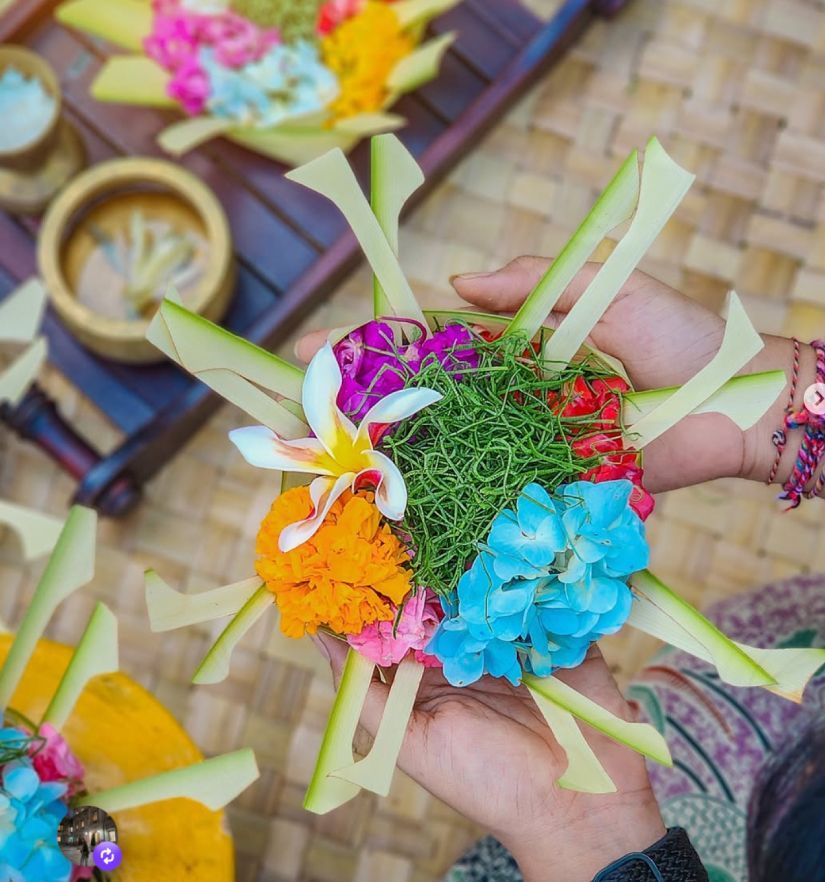
For many visitors, they are simply part of Bali’s beauty.
But behind these delicate offerings exists an entire visual language shaped by ritual, craftsmanship, symbolism, and repetition passed through generations.
What many travelers do not realize is that
canang sari is only one small part of Bali’s wider offering culture.
Across Bali, offerings appear in many forms depending on ceremony and meaning.
Some are prepared within minutes, while others require hours of work shared across families and communities.
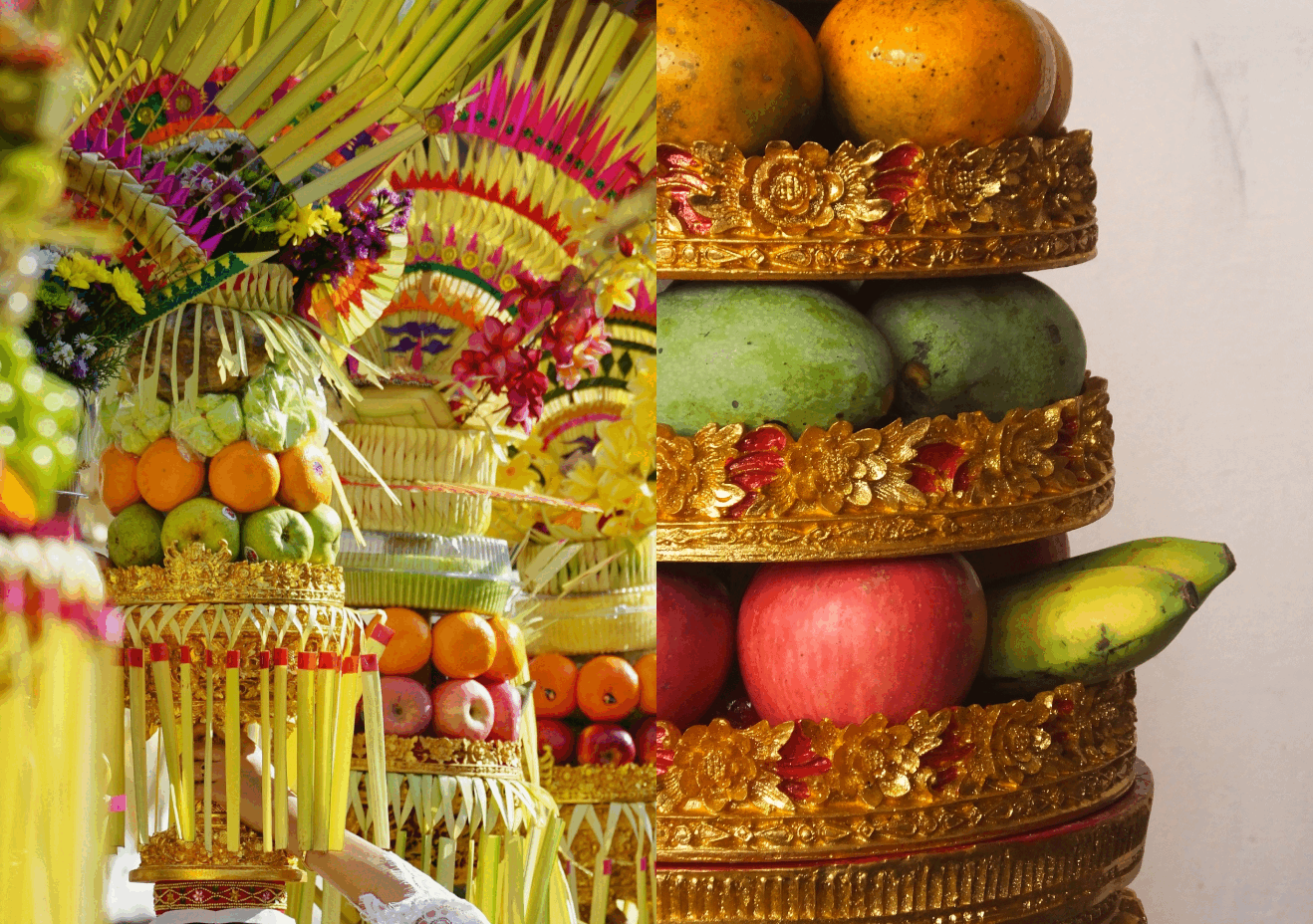
Flowers are carefully sorted by colour and meaning, coconut leaves are folded by hand, and fruits are stacked into towering arrangements known as gebogan during temple processions.
During
Galungan, Bali transforms once again.
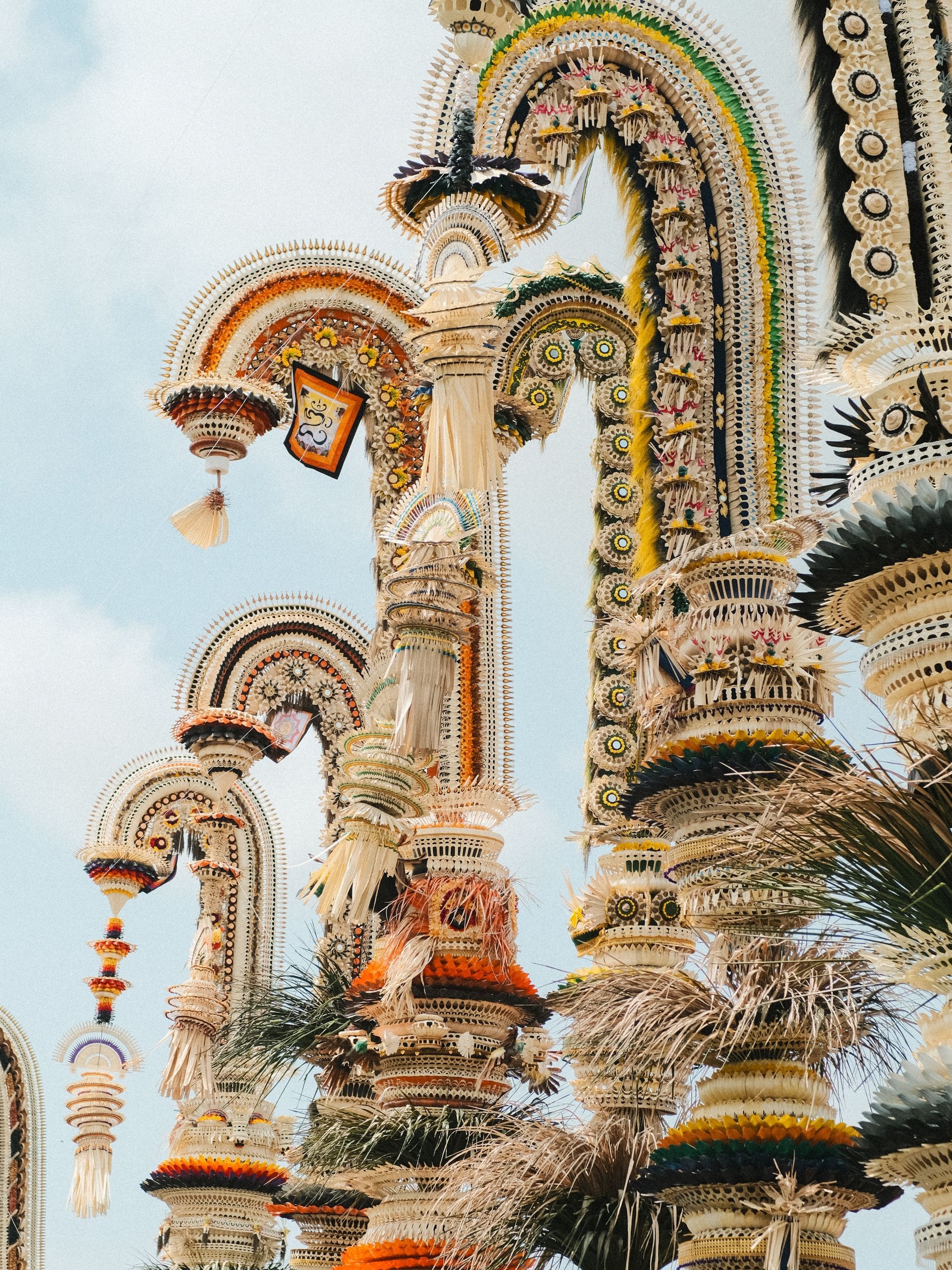
Tall bamboo structures known as
penjor begin appearing outside homes and along roadsides, curving overhead like temporary architectural installations moving with the wind.
Almost overnight, the landscape changes.
None of these traditions were created for tourism, yet they have quietly become part of Bali’s visual identity.

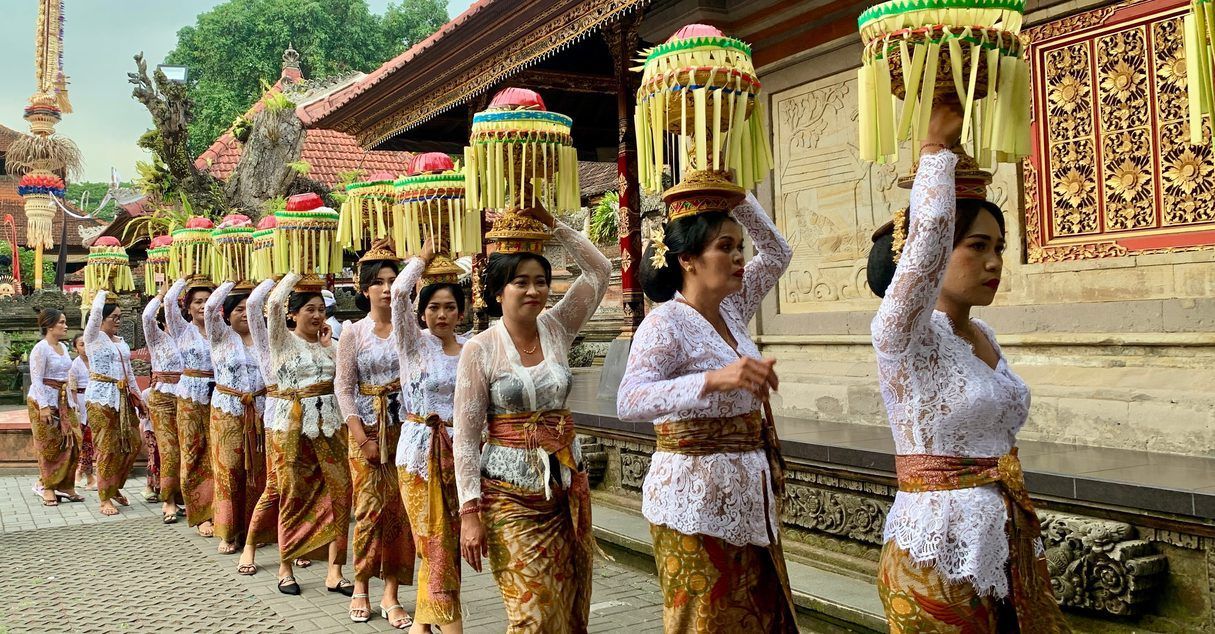
The symmetry of offerings.
The layering of flowers.
The movement of ceremonial fabrics.
The balance between color and negative space.
Many of the aesthetic details associated with Bali today originate not from design trends or hospitality concepts, but from rituals woven naturally into everyday life.
Here, beauty is never separated from daily living.
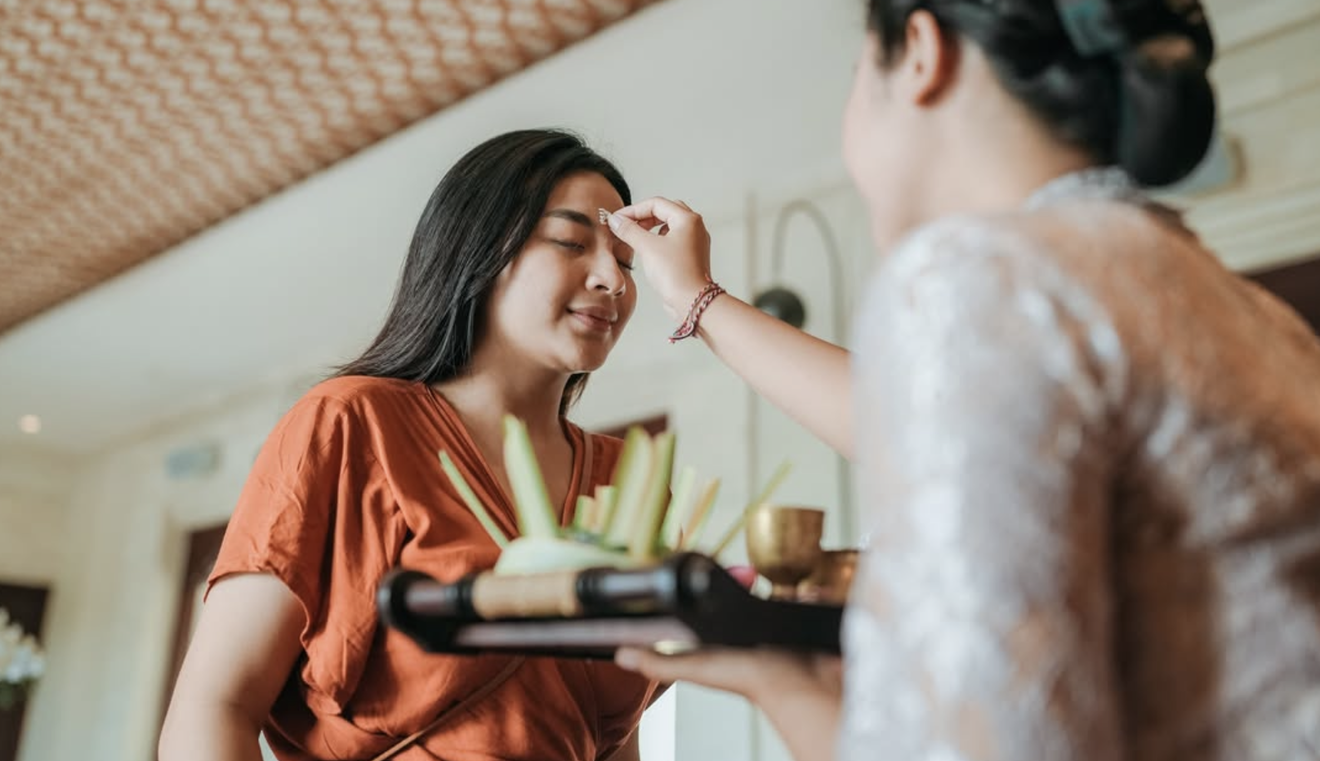
Offerings continue to be prepared each morning across the island, becoming part of the rhythm that shapes homes, communities, cafés, temples, and hotels alike.
Perhaps this is what makes Bali feel so distinct.
The idea that beauty is not created only to be seen, but as part of care, balance, and everyday ritual.
In a world increasingly shaped by curated experiences and carefully edited images, Bali’s offering culture reveals another kind of artistry.
One created quietly, patiently, and repeatedly each morning across the island.
SHARE TO..